
Tilari River Rafting
1200
Starting price
2 Hrs
Raft Duration
Tilari River · Chandgad, Kolhapur · Maharashtra
Tilari River Rafting —
The Complete Guide
A short, sharp monsoon-only rafting run on the Tilari river — deep in the Western Ghats forest where Maharashtra meets Goa and Karnataka. Available for just three months a year, when the rains bring the river fully to life.
Overview
What is Tilari River Rafting — and Why It's a Monsoon Secret
Tilari (also spelled Tillari) is a west-flowing river that rises in the Sahyadri hills of Chandgad taluka in Kolhapur district, cutting through thick Western Ghats forest before crossing into Goa, where it takes the name Chapora and runs on to the Arabian Sea.
The village and dam of Tilari sit right where the borders of Maharashtra, Goa, and Karnataka draw close together — a quiet, forested corner of the Konkan-Sahyadri corridor that most travellers still haven't discovered. The surrounding forest is thick with hornbills, giant squirrels, and seasonal waterfalls, and the river itself stays mild and shallow for most of the year.
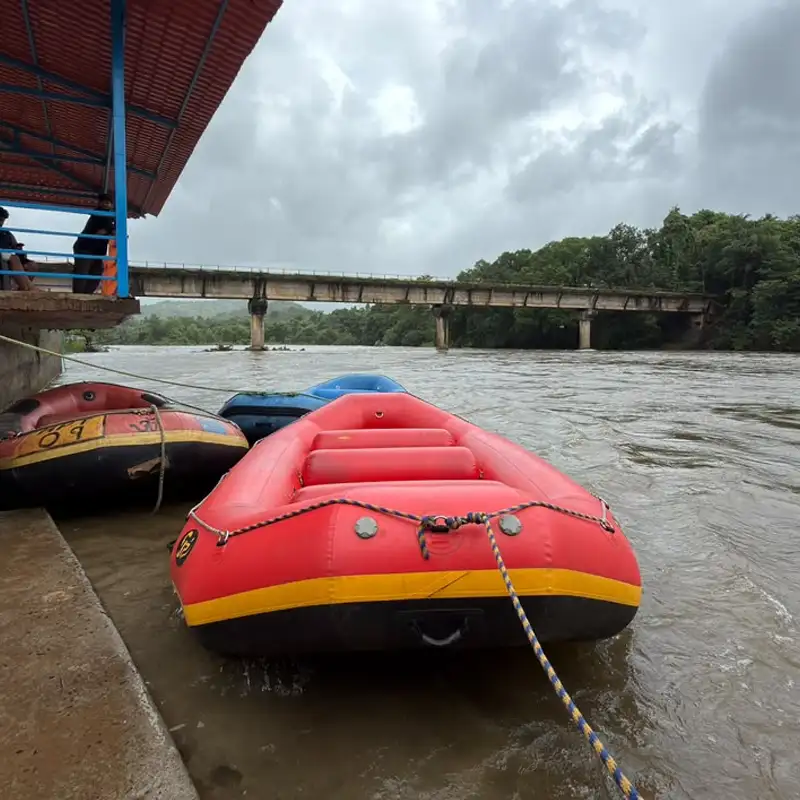
Then the monsoon arrives. Between July and September, sustained rainfall turns the calm Tilari into a proper whitewater run — rain-fed rapids, cold hill water, and a short but genuinely thrilling 3–4 km stretch that only exists for these few months. That narrow window is exactly what makes it special.
Good to know: Unlike dam-released rivers where rafting runs for most of the year, Tilari's rapids are entirely rain-fed. No monsoon, no rafting — the river simply isn't there the rest of the year. This is a genuine three-month-a-year experience.
Tilari River Rafting
The Rafting Run: Everything You Need to Know
The Tilari rafting run covers roughly 3 to 4 kilometres of monsoon-fed river, taking 1 to 1.5 hours on the water. Here's the full breakdown of what a session looks like from arrival to take-out.
Distance & Duration
The run covers approximately 3–4 kilometres of river, with 1 to 1.5 hours spent actually paddling. Counting transfer to the put-in point, the safety briefing, and gearing up, the full activity takes about 2 hours start to finish. Sessions run throughout the day, roughly from 9 AM to 4 PM, so you can pick a slot that fits your schedule.
Rapids & Grade
Expect Class II–III rapids during the monsoon and post-monsoon months — enough to get your heart rate up, with plenty of calmer stretches in between to catch your breath and take in the forest around you. Water volume and rapid intensity both peak in July and August, easing off gradually through September.
How a Session Runs
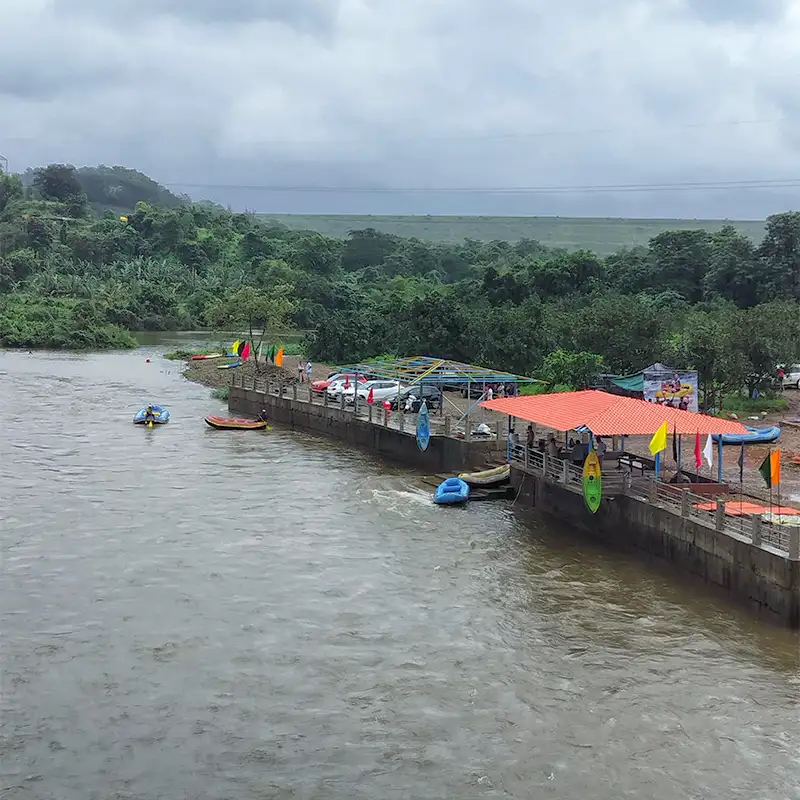
Arrive at the assembly point, complete registration, and confirm your batch timing. IDs are checked and group sizes are finalised here.
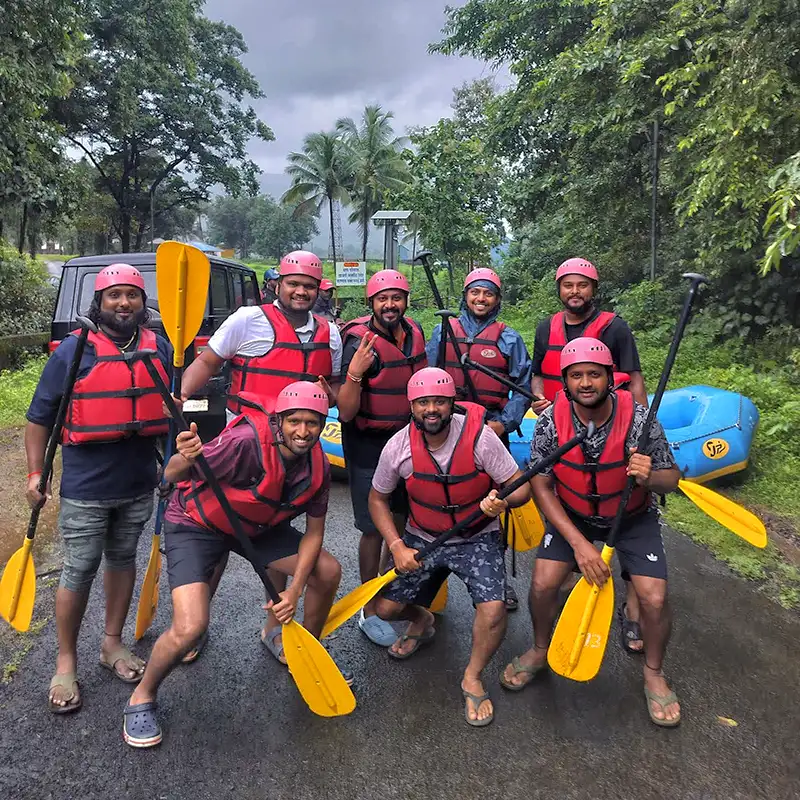
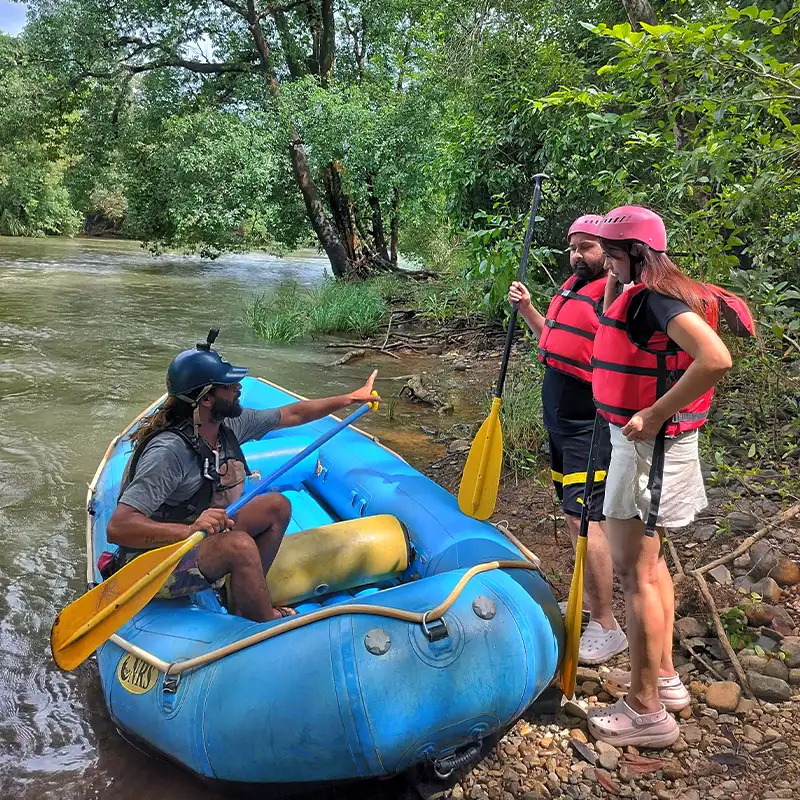
Your raft leader runs through paddle commands, what to do if you fall in, and how to sit in the raft. Helmets and lifejackets are fitted and checked.
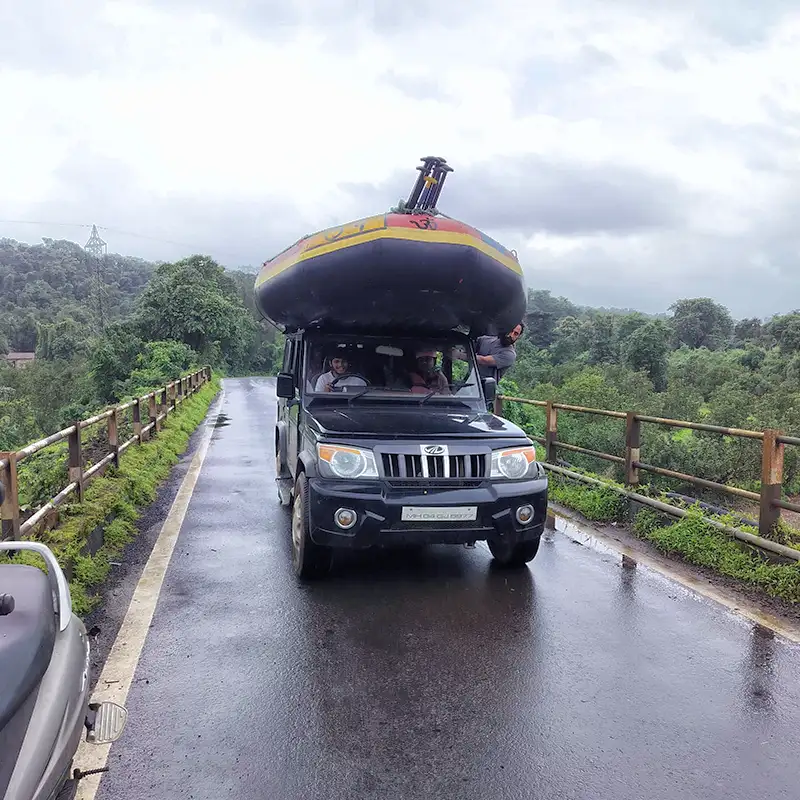
A short transfer takes your group to the launch point on the river, where rafts and rescue equipment are already staged.
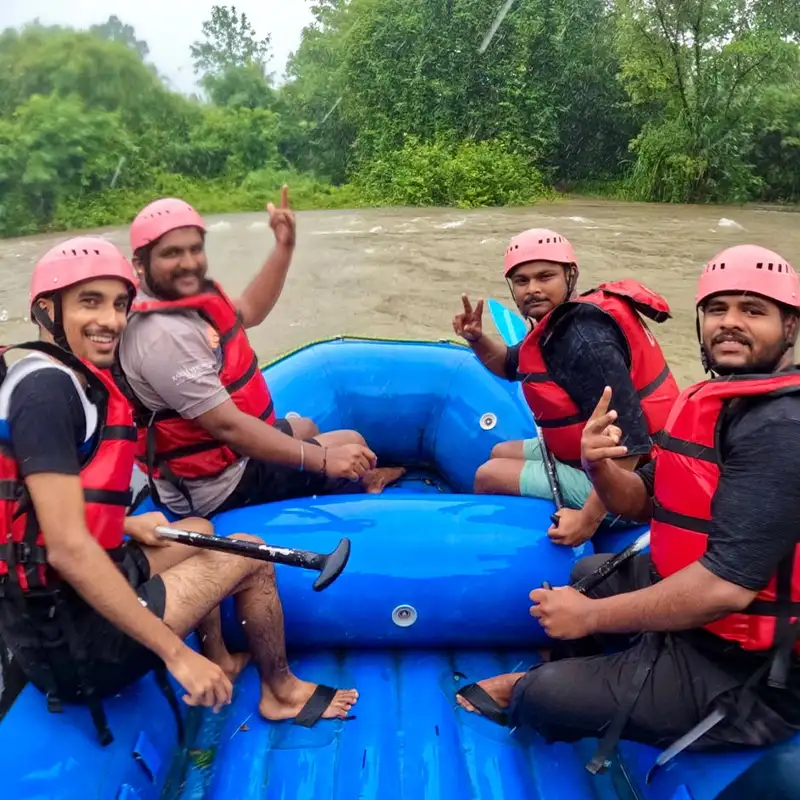
The run alternates between Class II–III rapids and quieter pools, giving you bursts of whitewater paddling and calm moments to enjoy the forest gorge around you.
The raft pulls in at the take-out point, gear is returned, and — where included — the day's photos are shared before the return transfer.
Who can raft: Basic fitness is all that's required. Swimming ability is usually not mandatory but helps with confidence in the water. The minimum age is commonly 12 years. Always follow your raft leader's commands, avoid loose clothing or jewellery, and skip alcohol before the trip — all equipment is provided as per international safety norms.
Monsoon Rafting Slots at Tilari
Three Months a Year, the River Comes Alive
From July through the end of September, we run daily rafting slots on the Tilari river — batches heading out through the day between 9 AM and 4 PM. A certified raft leader, all safety gear, and a full briefing are included in every trip.
Sessions are kept small so every rafter gets proper attention from the raft leader, both on land during the briefing and on the water during the run.
What's Included
- Certified guide / raft leader
- Paddles for every rafter
- Lifejackets & helmets
- Safety & rescue equipment
- Pre-raft safety briefing
- Pickup / drop (select packages)
- Photos (select packages)
- 2-hour total activity window
Best Time to Raft Tilari
When to Raft at Tilari
Tilari rafting exists only within a narrow monsoon window — but timing your visit within that window still makes a real difference.
Peak monsoon flow. The river runs full and fast, rapids are at their strongest, and the surrounding forest is at its greenest. The most exciting window for experienced first-timers.
Post-monsoon taper. Water levels ease off a little, rapids stay lively but slightly gentler, and visibility on clearer days is better — a good pick for families and nervous first-timers.
Off season. Once the rains stop, the river drops too low to raft and the activity is suspended entirely until the next monsoon arrives.
If you want the biggest rapids and the fullest river, aim for late July to mid-August. If you'd rather ease into rafting with slightly calmer water, September is the gentler end of the season.
First-Timer's Guide
Rafting Basics Every First-Timer Should Know
Never rafted before? These are the fundamentals your raft leader will cover on-site — worth knowing before you arrive.
-
1Learn the paddle commands
"Forward," "back paddle," "stop," and "get down" are your raft leader's core commands. Respond to them instantly — they're calling the shots based on what's coming up on the river, not just for show.
-
2Sit low, stay seated
Keep your feet braced inside the raft and your weight low. Never stand up while the raft is moving, especially through a rapid — it's the single biggest cause of falling overboard.
-
3If you fall in, float feet-first
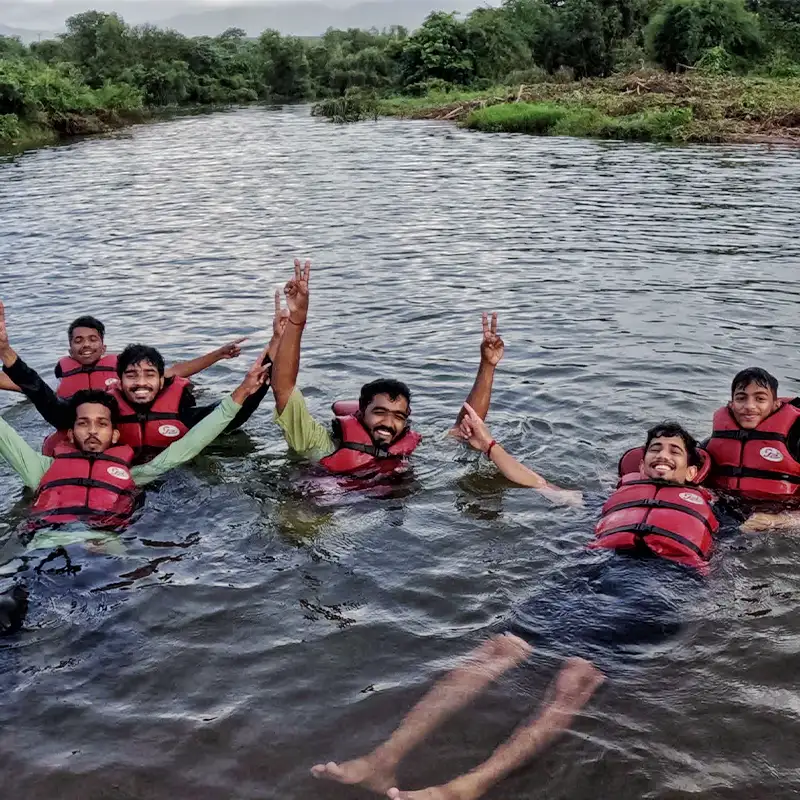
Should you end up in the water, roll onto your back, point your feet downstream, and keep them near the surface. Your lifejacket keeps you afloat — let it, and wait for the raft or safety kayak to reach you.
-
4Hold your paddle the right way
One hand cups the T-grip on top, the other holds the shaft lower down. A loosely held paddle can knock into you or another rafter — grip matters more than strength here.
-
5Headcounts happen often
Guides count heads before launch, after every significant rapid, and again at take-out. If you notice someone missing, say so immediately — don't assume someone else has flagged it.
-
6Keep your helmet and lifejacket on throughout
Even during calm, flat stretches of river, leave your gear exactly as fitted. Take instructions on when it's safe to loosen anything from your raft leader alone.
Getting Ready
What to Wear & What to Carry
You'll be soaked within minutes of launching, so pack light, pack smart, and leave anything you can't afford to lose behind.
Getting to Tilari
How to Reach Tilari
Tilari sits deep in Chandgad taluka near the Maharashtra–Goa border. Here are your main options for getting there.
Distance from Major Cities
To help you plan your journey, here is how far Tilari is from nearby key cities:
| City | Distance |
|---|---|
| Panjim | 52 km |
| Belagavi | 68 km |
| Kolhapur | 162 km |
| Hubli | 168 km |
| Pune | 390 km |
| Mumbai | 545 km |
| Bangalore | 581 km |
Travelling with a group tour or booking through a local operator means transport, permits where applicable, and safety gear are all sorted before you arrive — especially useful given how remote and forested this stretch of the ghats is.
Common Questions
Frequently Asked Questions
Tilari is in Chandgad taluka, Kolhapur district, Maharashtra — roughly 125–130 km from Kolhapur city, near where Maharashtra, Goa, and Karnataka meet in the Western Ghats.
Only during the monsoon and post-monsoon window — from early July to the end of September. The river is entirely rain-fed, so rafting simply doesn't run the rest of the year.
The run covers approximately 3–4 km, taking 1 to 1.5 hours on the water. Including transfers, the briefing, and safety checks, the total activity runs about 2 hours.
Mostly Class II–III rapids, which sit comfortably in beginner-to-intermediate territory. Rapids are strongest in July–August and ease off a little by September.
No — swimming ability usually isn't required, since lifejackets and a trained raft leader handle safety throughout. That said, being comfortable in water does help with confidence.
The minimum age is commonly 12 years. Basic fitness is all that's expected beyond that — no prior rafting experience is necessary.
Pricing typically runs from ₹1,100 to ₹1,300 per person, depending on the season and exact package inclusions such as pickup/drop and photos.
Most operators don't allow electronics on the raft, since the run is genuinely wet. Leave phones and wallets with your transport or in a waterproof locker at base.
Bookings are handled through Dandeli360. Since the season is short and slots fill up fast in peak monsoon, it's worth booking a few days ahead, especially for weekend batches.
Explore More
Related Guides & Destinations
More monsoon adventures and destinations around the Western Ghats.